
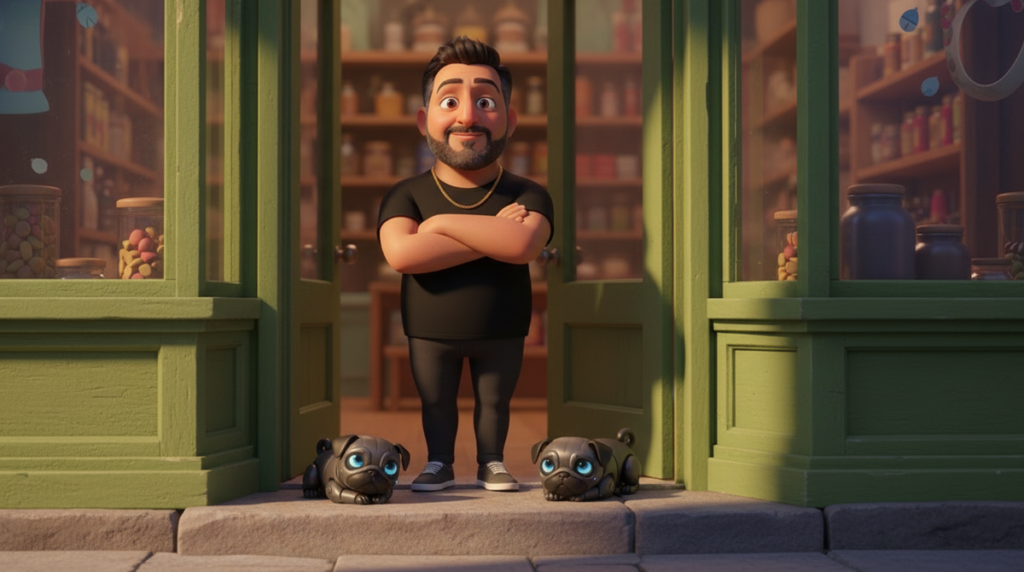
Ever feel a bit guilty for not wanting your business to be bigger?
You’re doing fine. Good margins, happy customers, you get home at a reasonable time. And yet somehow it still feels like you’re meant to be apologising for it.
We hear it a lot. Business owners who are quietly doing well but feel like they should be doing more. Hiring more. Opening a second site. Chasing bigger contracts they don’t actually want, because somewhere along the line “success” got redefined as “bigger.”
We don’t buy it. This is our opinion, not a rule, so have a read and see whether it matches what you’re feeling.
Before We Go Any Further
This is simply our view.
We’ve worked with businesses that grew brilliantly and businesses that grew themselves into a mess. We’ve also worked with businesses that stayed exactly the same size for years and quietly made their owners very comfortable. Have a look around, speak to a few people, and make your own mind up.
Where Did “Grow or Die” Actually Come From?
Mostly from people who benefit from you growing.
Investors need growth, because that’s how they get their return. Banks quite like growth, because it means bigger lending relationships. Software companies love growth, because a growing business buys more seats. Even a lot of business media is built around growth stories, because “founder stays small and happy” doesn’t get many clicks.
None of that makes growth bad. It just means an awful lot of the noise telling you to scale isn’t actually coming from a neutral place.
“Nobody’s ever rung us up worried they were too profitable and too calm. Funny, that.”
Is There Anything Actually Wrong With Staying the Same Size?
No. Genuinely, no.
A business that turns a healthy profit, pays its people properly, keeps its customers happy and lets the owner sleep at night has done its job. It doesn’t need to be twice the size next year to count as a success.
Growth adds complexity almost automatically. More staff means more management. More sites means more things that can go wrong at once. More turnover doesn’t always mean more profit, and it very often means considerably more stress for considerably longer hours.
Plenty of owners chase that trade and it works brilliantly for them. Plenty of others chase it, get it, and then spend two years wondering why running the business stopped being enjoyable.
What Does “Grow or Die” Actually Cost People?
To be clear, we haven’t got a specific client’s story to lift and drop in here, so let’s keep this hypothetical, but it’s a shape we see often enough to be worth describing.
Imagine a small firm doing genuinely well. Three or four people, loyal customers, decent margin, owner not stretched too thin. Someone convinces them the next logical step is a second location, because “you can’t stand still.”
Eighteen months later, the original site is running fine but the new one is bleeding cash, the owner is managing two teams badly instead of one team well, and the thing that made the first business good, the owner actually being present, has quietly disappeared. On paper, revenue is up. In reality, profit per hour worked has gone down, and so has everyone’s mood.
That’s not a warning against ever opening a second site. Plenty of businesses do it properly and it works. It’s a warning against doing it because you felt you were supposed to, rather than because the numbers and your own appetite both said yes.
So When Does Scaling Actually Make Sense?
When it solves a real problem or captures a real opportunity, not when it simply feels like the next box to tick.
Growth makes sense when demand already exists and you genuinely can’t meet it. It makes sense when growing makes the business meaningfully more resilient, rather than just bigger. It makes sense when you, personally, actually want to run a bigger and more complicated business, because someone has to.
“Scaling is a decision, not an obligation. If you can’t tell us what problem it solves, we’d want to know why you’re doing it.”
There’s a real difference between “we could grow” and “we should grow.” A lot of businesses never stop to ask which one they’re actually looking at.
Does This Mean You Should Never Try to Grow?
Not at all. If you want to build something bigger, genuinely go for it. Some people are wired for that, and watching someone build a proper business from nothing is one of the best parts of our job.
Our point isn’t “don’t grow.” It’s that growth should be a choice you make on purpose, based on what you actually want and what the numbers support, not a default setting you never questioned.
So, What Should You Actually Do?
- Work out what “success” genuinely means to you, not what it’s supposed to mean.
- Look honestly at whether growth would improve your actual life, not just your turnover figure.
- If you do want to grow, work out what specific problem or opportunity it solves before you commit to it.
- If you don’t want to grow, stop treating that as something you need to justify to anyone.
Our Final View
We think plenty of business owners are running perfectly good businesses and quietly beating themselves up for not wanting them to be bigger.
There’s nothing wrong with staying small on purpose. A well-run, profitable business that stays the same size for the next ten years hasn’t failed. It’s arguably done exactly what it was supposed to do.
Growth is a tool, not a trophy. Use it when it genuinely helps. Ignore it when it doesn’t, and don’t let anyone make you feel small for making that call.
Happy Where You Are, But Fancy a Sanity Check?
If you’re weighing up whether to grow, or you’ve been quietly told you “should,” give us a call.
We’re not going to tell you to scale just because it’s what people expect to hear. We’ll talk it through properly and give you our honest view either way.